Master Painters: The Legacy and Techniques of Today's Leading Oil Painters
In the vast and evolving landscape of contemporary art, oil painting remains a cornerstone of artistic expression, revered for its depth, luminosity, and unparalleled versatility. While digital media and conceptual installations have expanded the boundaries of what art can be, a dedicated cadre of master painters continues to push the medium of oil on canvas to new heights, blending centuries-old techniques with modern sensibilities. This definitive guide explores the world of today's leading oil painters, examining the techniques that define their work, the legacies they are building, and the profound impact they have on the global art market and cultural discourse. From hyperrealistic detail to expressive abstraction, these artists demonstrate that oil painting is not a relic of the past but a vibrant, living tradition.
The Enduring Allure of Oil Painting in the Digital Age
In an era dominated by screens and pixels, the tactile, physical presence of an oil painting holds a unique power. The medium's slow drying time allows for unparalleled blending and layering, creating a richness and depth that digital reproductions cannot fully capture. According to a 2023 report from the International Art Market Research Institute, sales of contemporary oil paintings accounted for approximately 38% of all fine art sales at major auction houses, a figure that has remained stable over the past decade, underscoring its enduring collector appeal. This resilience speaks to a fundamental human desire for the handmade object, the evidence of the artist's hand, and the material history embedded in layers of pigment and medium.
Why Oil Painting Still Matters
The persistence of oil painting is not merely nostalgic; it is a testament to its unique material properties. The refractive index of linseed oil allows light to penetrate the paint film and reflect back from the pigment particles, creating the luminous glow that is the hallmark of the Old Masters. Contemporary artists exploit this quality, whether through glazing techniques that build up transparent layers of color or through impasto applications that catch light on their textured surfaces. Furthermore, the chemical stability and archival quality of properly prepared oil paints ensure that these works can endure for centuries, allowing artists to contribute to a visual legacy that stretches from Jan van Eyck to the present day.
Defining the Contemporary Master Painter
Who qualifies as a master painter in the 21st century? The term transcends mere technical proficiency. Today's masters are those who have achieved a synthesis of profound skill, a distinct and recognizable visual language, and significant influence within the art world. They are innovators who may deconstruct traditional methods or fuse them with new approaches, all while contributing meaningfully to ongoing artistic conversations. Their work commands attention in major museums, garners critical acclaim, and achieves notable success in the primary and secondary markets. Unlike the guild systems of the past, mastery today is often validated by a combination of institutional recognition, market performance, and peer respect.
Criteria for Mastery
A contemporary master painter typically exhibits several key attributes:
- Technical Virtuosity: A deep, often expansive command of the materials and processes of oil painting.
- Conceptual Depth: Work that engages with significant themes—be they personal, political, social, or art-historical.
- Consistent Evolution: A body of work that shows clear development and risk-taking over time, rather than repetition.
- Influence: Their work influences other artists and shapes trends within the painting community.
For a deeper exploration of the lives and careers that define such artistic achievement, our comprehensive resource, Artist Spotlights and Profiles: A Complete Guide, offers detailed analyses of artistic trajectories and methodologies.
Major Techniques Employed by Leading Painters Today
The toolbox of the contemporary oil painter is both ancient and newly stocked. While the fundamental chemistry of pigment, binder, and solvent remains, the application of these materials has diversified dramatically.
Glazing and Layering
This Renaissance technique involves applying thin, transparent layers of paint (glazes) over a dry underlayer. Each glaze modifies the color and tone of the layer beneath, creating incredible depth and luminosity. Artists like Katherine Hubbard use complex glazing to achieve ethereal, light-filled atmospheres in her figurative works, sometimes applying dozens of layers to build up a single passage of skin tone.
Impasto and Textural Innovation
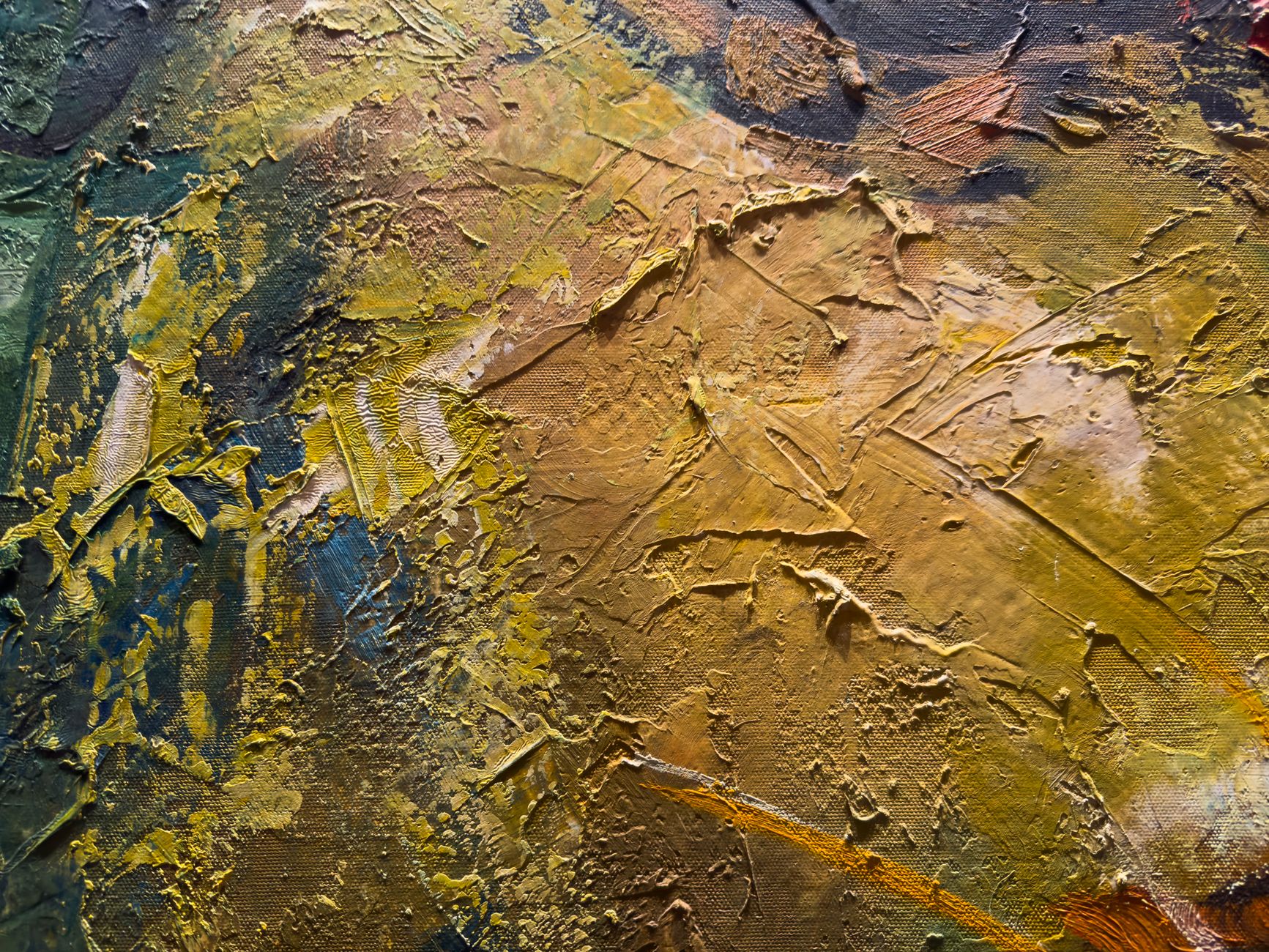
The opposite of glazing, impasto involves applying paint thickly, often with a palette knife, so that brushstrokes or knife marks are visibly textured. Contemporary masters like Anselm Kiefer take this to an extreme, incorporating materials like straw, ash, and lead into his oil paints to create monumental, heavily textured surfaces that are as much sculpture as painting.
Alla Prima (Wet-on-Wet)
Meaning "at first attempt" in Italian, this technique involves completing a painting in one session while the paint is still wet. It requires confidence and speed, favoring a more direct, expressive style. Many of Nicole Eisenman's vibrant, narrative canvases showcase a masterful use of alla prima, capturing energy and immediacy.
Grattage and Sgraffito
These are subtractive methods. Grattage involves scraping away wet paint to reveal layers underneath, while sgraffito is scratching into a dry layer to reveal a contrasting underlayer. Artists use these for linear detail, texture, and unexpected revelations of color.
Mixed Media Integration
Perhaps the most defining technical trend among leading painters today is the integration of non-traditional materials. This includes using oil paints over digital prints, combining them with resin, gold leaf, or fabric, or even painting over photographic transfers. This hybrid approach breaks down the hierarchy between mediums.
| Technique | Core Principle | Contemporary Exemplar | Visual Effect |
|---|---|---|---|
| Glazing | Building transparent layers | Katherine Hubbard | Luminosity, depth, subtle color shifts |
| Impasto | Thick, textural application | Anselm Kiefer | Tactility, physical presence, dramatic light play |
| Alla Prima | Direct painting in one session | Nicole Eisenman | Energy, spontaneity, bold color relationships |
| Mixed Media | Combining oils with other materials | Mark Bradford | Collaged surfaces, conceptual layers, urban texture |
Profiles of Pivotal Contemporary Masters
To understand the current landscape, one must engage with the work of its defining figures. The following artists represent a spectrum of approaches, each a master in their own right.
Kehinde Wiley: Reclaiming the Grand Portrait
Wiley's technique is a fascinating fusion of Old Master grandeur and contemporary street aesthetic. He begins with photographs of his subjects, often young Black men and women found in urban settings. These are translated into large-scale paintings where the figures are placed within ornate, decorative backgrounds inspired by historical textiles and wallpapers. His glazing technique, reminiscent of Titian and Van Dyck, renders fabrics and skin with sumptuous realism, while the flat, patterned backgrounds create a dynamic tension between figure and ground. Wiley's work masterfully interrogates power, representation, and art history.
Julie Mehretu: Abstract Cartographies
Mehretu builds her monumental abstract paintings through a complex, layered process. She often begins with architectural drawings or maps on the canvas, then uses projectors to layer additional imagery—from protest photos to financial charts—which she paints over. Her mark-making is a frenetic combination of precise, calligraphic lines and explosive, gestural sweaths of paint applied with brushes, airbrushes, and silkscreens. The result is a dense, palimpsestic surface that visualizes the chaotic forces of globalization, migration, and capital.
Gerhard Richter: The Master of Paradox
Richter is perhaps the ultimate technician, refusing allegiance to any single style. His practice encompasses photorealistic paintings (blurred to mediate the photographic source), monumental abstracts created with squeegees, and serene color chart paintings. His abstract technique is particularly influential: he applies large quantities of wet oil paint to the canvas and then drags a giant homemade squeegee across the surface, simultaneously depositing, mixing, and scraping away paint. This chance-driven, physical process creates stunningly complex layers of color and texture that are nonetheless meticulously controlled.
Mini-Case Study: The Market Trajectory of Cecily Brown
British painter Cecily Brown provides a compelling case study in the evolution and market recognition of a contemporary master. Emerging in the late 1990s, Brown revitalized large-scale, gestural abstraction by infusing it with figurative fragments and art-historical references (to Fragonard, Goya, de Kooning). Her technique is aggressively physical, using thick impasto and a vibrant, fleshy palette to suggest bodies in states of ecstasy or dissolution. Initially championed by critics for her fearless energy, her market solidified through consistent museum exhibitions (MoMA, Tate Modern) and strong primary gallery representation. According to ArtTactic, the average price for her work at auction increased by over 400% between 2015 and 2023, a clear indicator of her established position as a leading painter whose technical bravura is matched by conceptual rigor.
The Artist's Studio: Materials and Process
The choice of materials fundamentally shapes the outcome. Leading painters are often meticulous about their supplies.
Modern Pigments and Palettes
While many masters still use traditional earth pigments, the modern palette is vastly expanded by synthetic colors like Phthalo Blue and Quinacridone Magenta, offering unprecedented brightness and stability. Artists like Sean Scully leverage these intense, modern hues in his geometric abstractions, creating optical vibrations that would be impossible with older pigments.
Mediums and Solvents
The choice of medium (the liquid mixed with paint to alter its consistency) is crucial. Alkyd mediums speed drying for layering, while stand oil increases gloss and flow. A major trend among today's leading painters is a shift toward safer, odorless solvents for health reasons, without compromising working properties.
Supports and Grounds
The canvas is no longer the only option. Many painters use aluminum panels for an ultra-smooth, non-absorbent surface, or linen for its superior strength and tooth. The ground (the preparatory layer) is also critical; colored grounds (e.g., a mid-tone gray or red oxide) are increasingly used to set a unifying tonal key for the entire painting from the outset.
Education and the Transmission of Knowledge
How does one become a master painter today? The path has shifted from the apprentice model to formal academic training, though elements of the old ways persist.
The Role of MFA Programs
Prestigious Master of Fine Arts programs remain a primary pipeline. They provide not only technical instruction but, more importantly, immersion in critical theory and access to a network of peers, critics, and gallerists. However, there is a growing critique that some programs emphasize concept over craft. In response, a number of traditional ateliers and academies have seen a resurgence, focusing intensely on foundational drawing and painting skills.
The Digital Apprentice
Online platforms have democratized access to knowledge. Artists can now study the techniques of masters through high-resolution details, time-lapse videos of studio practice, and even virtual workshops. This has created a global community of practice where techniques are shared and hybridized at an unprecedented pace.
The Business of Mastery: Market and Recognition
Technical skill and artistic vision must intersect with the realities of the art world to achieve the status of a leading painter.
Gallery Representation and Museum Validation
Representation by a top-tier gallery (e.g., Gagosian, Hauser & Wirth, David Zwirner) provides artists with studio support, international exhibition opportunities, and access to major collectors. Museum acquisitions and solo exhibitions provide the institutional stamp of approval that cements an artist's legacy. For many masters, their first mid-career museum retrospective is a pivotal career milestone.
The Auction Market as a Barometer
While primary sales are private, the public secondary market at auction houses like Christie's and Sotheby's provides a transparent, though volatile, metric of an artist's market standing. Consistent strong performance at auction signals enduring demand and collector confidence. It's important to note that the artists driving the most exciting technical innovations are not always the top auction performers, which often favors more easily categorized, signature styles.
Critical Themes in Contemporary Oil Painting
The content of today's masterworks is as diverse as their techniques, but several key themes emerge prominently.
Identity and Representation
Following the legacy of Wiley and others, many painters are engaged in re-examining portraiture and history painting to include narratives that have been historically marginalized. This involves not just subject matter but also rethinking compositional hierarchies and art-historical references.
The Anthropocene and Ecology
Many leading painters use the materiality of oil paint—its viscosity, its potential for decay-like textures, its ability to mimic natural forms—to address climate change and humanity's relationship with the natural world. Their canvases become fields where beauty and catastrophe intertwine.
Abstraction as Philosophy
For abstract masters, the act of painting is a philosophical inquiry into perception, emotion, and the nature of reality itself. The canvas is a site for exploring pure color relationships, spatial dynamics, and the physicality of the mark, often carrying profound metaphysical weight.
The Future of the Medium: Innovation on the Horizon
The future of oil painting is being written in studios today through technological and conceptual fusion.
Digital/Analog Synthesis
This is the most significant frontier. Artists are using AI to generate compositional sketches, 3D software to plan complex spatial arrangements, and digital projectors to transfer images to canvas with precision, which they then interpret and subvert with physical paint. The painting becomes a dialogue between the algorithm and the hand.
Sustainable and Bio-Based Materials
Driven by environmental and health concerns, there is active research into creating high-quality oil paints from sustainable sources, such as algae-based pigments and non-toxic, plant-derived solvents and mediums. The next generation of masters may have a palette that is both ancient and radically new.
Expanded Painting
The definition of a painting continues to expand beyond the rectangular canvas on a wall. Leading artists are creating painted installations, where the painted surface interacts with architecture, light, and sound, or making painted objects that occupy space three-dimensionally. The techniques of oil painting are applied to new forms and contexts.
For a look at the artists who are pioneering these very innovations and shaping the next chapter of painting, explore our feature on the Rising Stars: 10 Emerging Contemporary Artists to Watch in 2024.
Actionable Takeaways for Artists and Collectors
For Aspiring Painters:
- Master the Fundamentals First: Develop a rigorous practice in drawing, color theory, and paint handling before chasing style. Fluency with the rules allows for more meaningful breaking of them.
- Study the Masters, Old and New: Analyze paintings in person whenever possible. Notice how the paint is applied, how layers are built, how edges are handled. Technical insight comes from close looking.
- Develop a Conceptual Framework: Ask yourself why you paint. What are you trying to understand, express, or question? Technique should serve a deeper intention.
For Collectors and Enthusiasts:
- Look Beyond the Image: When assessing a painting, consider the artist's process and material choices. The intelligence of the technique often reveals the depth of the concept.
- Follow an Artist's Trajectory: Look for consistent development and risk-taking over time. A true master's career is a journey, not a repetition of a successful formula.
- Engage with the Artist's Context: Understand the artistic, social, and art-historical conversations in which the painting participates. This enriches the appreciation of the work immensely.
Conclusion: A Living, Breathing Tradition
The legacy of today's leading oil painters is one of dynamic continuity. They are not mere custodians of a dead language but fluent speakers who are adding new vocabulary, syntax, and dialects to an ongoing conversation that spans centuries. They prove that oil painting, with its unique material alchemy and deep historical roots, remains one of the most potent mediums for exploring the complexities of contemporary life. From the hyperreal to the utterly abstract, their work demonstrates that mastery in the 21st century is defined by a dual commitment: an unflinching engagement with the technical possibilities of the medium and the courage to use it to address the urgent questions of our time. The canvas, as ever, is a site of profound investigation, and these master painters are its most compelling explorers, ensuring that the rich tradition of oil painting not only endures but vigorously evolves.