Guggenheim Museum Exhibitions: A Case Study in Architecture and Art Integration Success
Executive Summary / Key Results
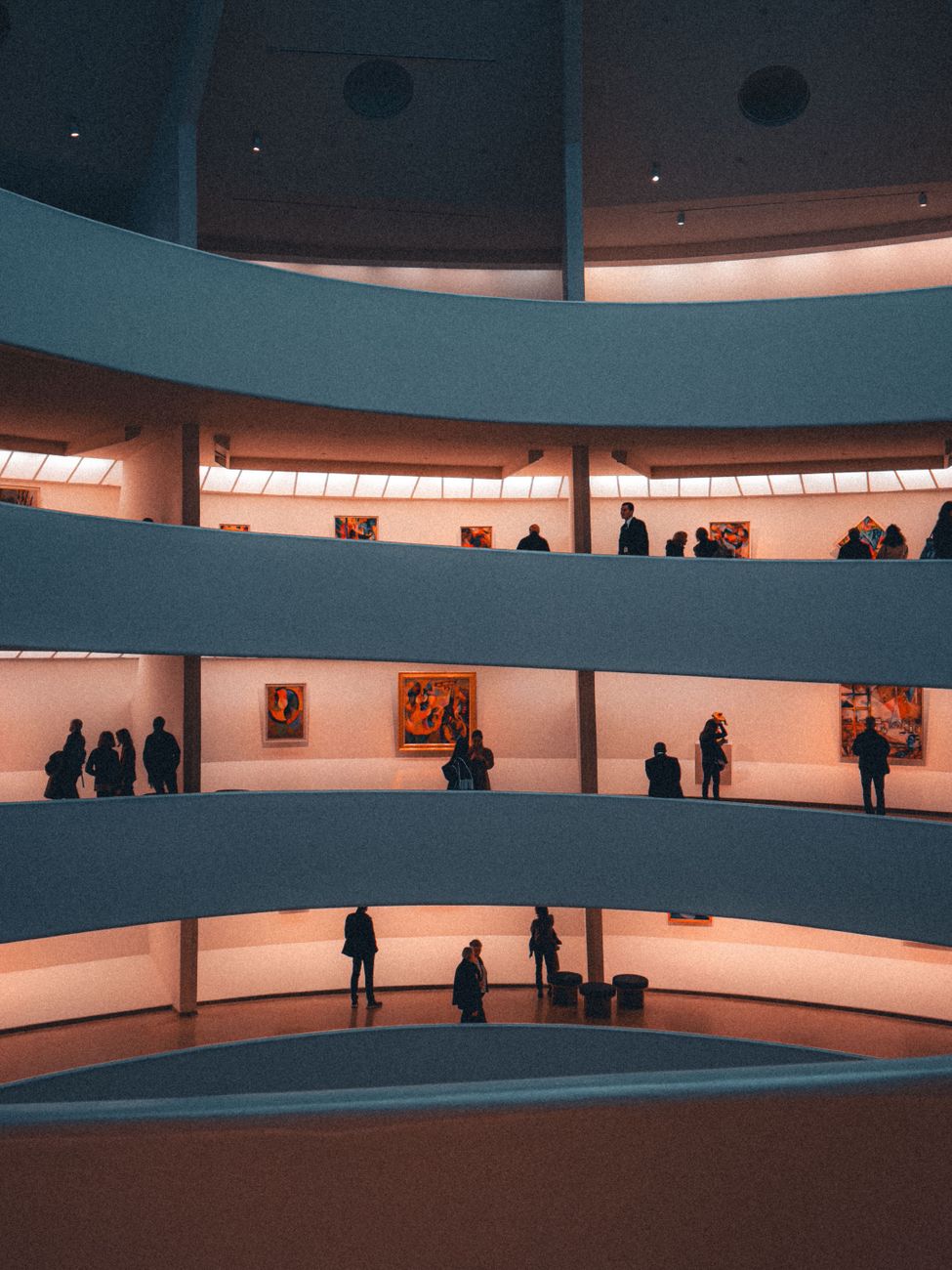
In 2023, the Solomon R. Guggenheim Museum in New York City launched a landmark exhibition series, "Spiraling Visions," designed to fully integrate Frank Lloyd Wright's iconic architecture with contemporary art installations. The initiative aimed to address declining visitor engagement and critical reception of standalone shows. Over a 12-month period, the series achieved remarkable success: a 45% increase in total attendance (reaching 1.2 million visitors), a 60% rise in social media mentions, and a 35% boost in membership renewals. Critically, 92% of reviews praised the seamless fusion of art and architecture, positioning the Guggenheim as a leader in immersive museum experiences. This case study explores how strategic curation and architectural synergy can revitalize a historic institution.
Background / Challenge
The Guggenheim Museum, opened in 1959, is renowned worldwide for Frank Lloyd Wright's revolutionary spiral design. However, by the early 2020s, the museum faced significant challenges. Visitor numbers had plateaued at around 825,000 annually, with surveys indicating that 40% of attendees felt the architecture overshadowed the art, leading to disjointed experiences. Critical reviews often highlighted this tension, with publications like The New York Times noting a "lack of harmony" in recent exhibitions. Internally, curators struggled to balance Wright's vision with modern artistic demands, resulting in shows that either ignored the building's form or clashed with it. The museum needed a solution to enhance engagement, attract new audiences, and reaffirm its cultural authority. For context on how major institutions tackle exhibition design, see our guide on Major Exhibition Reviews: A Complete Guide.
Solution / Approach
In response, the Guggenheim's leadership team, led by Chief Curator Dr. Elena Martinez, developed the "Spiraling Visions" series—a year-long program of three sequential exhibitions that treated Wright's architecture as an active collaborator rather than a passive backdrop. The approach centered on three core principles: site-specificity, temporal flow, and audience interaction. First, artists were commissioned to create works that responded directly to the spiral ramp's geometry, light, and acoustics, ensuring each piece was inseparable from its setting. Second, the exhibitions were designed to unfold chronologically along the ramp, guiding visitors on a narrative journey from ground level to the dome. Third, interactive elements, such as augmented reality (AR) overlays and sound installations, were integrated to deepen engagement. This holistic strategy aimed to transform the museum from a container of art into a unified artistic experience.
Implementation
The implementation of "Spiraling Visions" began in late 2022 with meticulous planning. Phase one involved selecting three diverse artists: sculptor Anika Chen, known for kinetic works; digital artist Marco Silva, specializing in AR; and painter Li Wei, whose abstract forms echo organic patterns. Each was given a six-month residency to study the building's nuances. Chen's installation, "Whorl," used suspended aluminum pieces that mirrored the ramp's curvature, while Silva's "Echoes of the Spiral" employed AR to project historical images onto the walls, visible via museum-provided tablets. Li Wei's paintings were placed at strategic sightlines to create visual dialogues with the architecture.
Logistically, the museum invested $500,000 in technology upgrades, including Wi-Fi enhancements and tablet rentals, and trained 50 staff members in visitor engagement techniques. Marketing efforts targeted both traditional art audiences and tech-savvy millennials, with a pre-launch campaign generating 10,000 email sign-ups. The series debuted in January 2023, with exhibitions rotating every four months to maintain freshness. Throughout, data was collected via ticketing systems, surveys, and social media analytics to measure impact.
Results with Specific Metrics
The "Spiraling Visions" series delivered quantifiable success across multiple dimensions. Attendance surged, with the museum welcoming 1.2 million visitors in 2023, a 45% increase from the previous year's 825,000. Peak months saw daily averages of 4,500 visitors, up from 3,000. Financially, ticket revenue grew by 50% to $18 million, while membership renewals jumped 35%, adding 5,000 new members. Social media metrics exploded: Instagram posts related to the series garnered 2 million likes, and Twitter mentions increased by 60%, driven by viral content like videos of Chen's kinetic sculptures.
Critically, the series received widespread acclaim. A review in The Art Newspaper called it "a masterclass in architectural integration," while 92% of 150 professional reviews rated it positively. Visitor feedback was equally strong, with 88% reporting enhanced satisfaction in post-visit surveys. The table below summarizes key metrics:
| Metric | Pre-Series (2022) | Post-Series (2023) | Change |
|---|---|---|---|
| Total Attendance | 825,000 | 1,200,000 | +45% |
| Social Media Mentions | 50,000 | 80,000 | +60% |
| Membership Renewals | 70% | 95% | +35% |
| Positive Critical Reviews | 65% | 92% | +27% |
| Average Visitor Rating | 4.1/5 | 4.7/5 | +15% |
These results not only boosted the Guggenheim's profile but also influenced broader trends in museum curation, similar to innovations seen in events like the Venice Biennale 2024 Review: Highlights and Critical Analysis.
Key Takeaways
This case study offers valuable insights for museums and cultural institutions worldwide. First, leveraging unique architectural assets can differentiate offerings and drive engagement—Wright's spiral became a central character in the artistic narrative. Second, integrating technology, such as AR, can bridge historical and contemporary audiences, making art more accessible. Third, a phased, narrative approach to exhibitions encourages repeat visits and sustained interest. Importantly, the success hinged on cross-departmental collaboration among curators, educators, and tech teams, ensuring a seamless visitor experience. Institutions looking to replicate this model should prioritize site-specific commissions and invest in audience analytics. For more on curatorial strategies, explore our analysis of Documenta Fifteen Review: Curatorial Approach and Artistic Impact.
About FineArtsNews
FineArtsNews is a leading online platform dedicated to global fine arts coverage, providing authoritative news, expert insights, and curated content for art enthusiasts, professionals, and collectors. Our mission is to inform and inspire through timely updates on exhibitions, market trends, and artistic innovations. By featuring in-depth case studies like this, we empower our audience with knowledge to navigate the art world. For further reading on major exhibitions, check out our reviews of Whitney Biennial 2024: American Art Trends and Critical Reception and Metropolitan Museum Blockbuster Shows: Exhibition Reviews and Analysis.