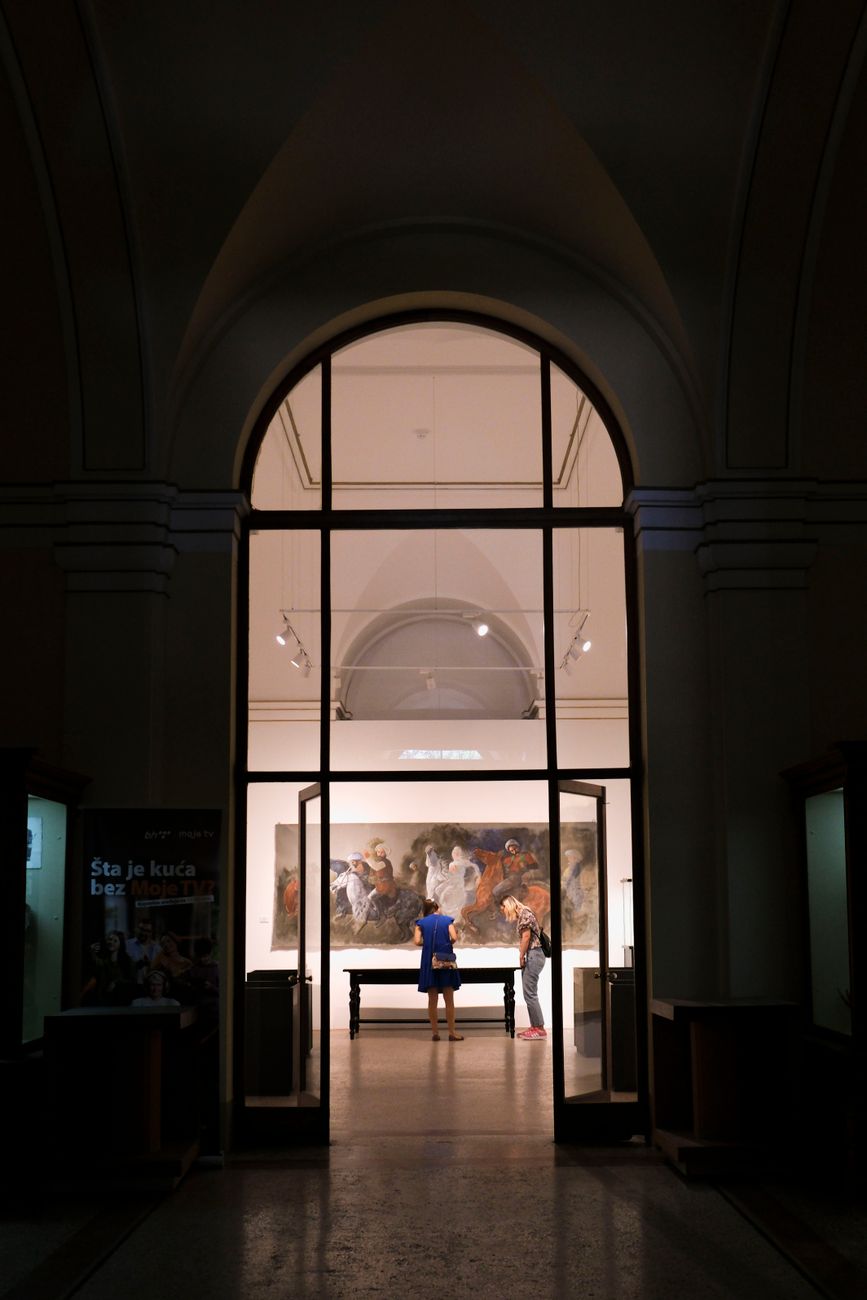
How to Plan a Solo Museum Visit: The Benchmark Data Behind a Better Introvert Museum Trip
Plan a solo museum visit by choosing one or two galleries rather than the whole building, booking a weekday morning arrival between opening and 11 a.m., capping the visit at two to three hours with one deliberate break at the midpoint, and orienting yourself for the first 30 minutes without stopping to study anything. That single protocol, assembled from independent museum guidance, is the core of this introvert museum guide — and it is the same answer whether you are a first-timer or a seasoned member.
The full planning sequence, stated in one place: research current exhibitions and hours in advance, identify a small set of must-see works, arrive early on a weekday, walk the main floor without stopping for the first half hour, spend the next hour in one or two galleries that genuinely interest you, break at the 90-to-120-minute mark, and return for one more gallery or a favorite piece before you leave.
| Benchmark Metric | Solo-Visit Standard | Why It Matters |
|---|---|---|
| Ideal visit length | 2–3 hours | Sensory, decision, and physical fatigue compound past this window |
| Best arrival window | Weekday, opening to 11 a.m. | Weekend afternoons and school holidays are the worst times for sensory overload |
| Museum type for first solo trips | Smaller, specialized institution | Flagship museums on weekends are the hardest environment to navigate alone |
| Galleries to target | 1–2 per visit | Attempting the whole building triggers fatigue |
| Orientation phase | 0–30 minutes, no stopping | Builds a mental map before deep engagement begins |
| Focus phase | 30–90 minutes | The window for slow, sustained attention |
| Deliberate break | 90–120 minutes | Rest, hydrate, take notes; galleries include benches and folding stools |
| Closing phase | 120–180 minutes | One more gallery or a return to a favorite work |
| Core planning input | Current exhibitions, hours, special events | Prevents wasted trips and mismatched expectations |
Key Findings Summary
Four benchmark conclusions emerge from the source material, and each one contradicts a habit most visitors bring to museums.
- Two to three hours is the ceiling, not the target. Beyond that window, sensory fatigue, decision fatigue, and physical tiredness compound and turn a pleasurable experience into an overwhelming one.
- Arrival timing beats ticket type. The single most effective way to avoid crowds is a weekday morning visit, ideally between opening time and 11 a.m..
- Breadth is the enemy of a solo visit. Visitors are explicitly advised not to try to see everything in one visit, and instead to pick a gallery, an exhibition, or even a handful of works and spend real time with them.
- Structure frees you, it doesn't constrain you. A timed four-phase visit still leaves room to wander from the map and follow your own instincts once you are inside a gallery that interests you.
Methodology: Where These Benchmarks Come From
This analysis synthesizes three independent practitioner sources: a museum's own visitor guidance published by the Saint Louis Art Museum, a 2026 solo-visit guide focused specifically on introverts, and a general guide to visiting museums alone. All three are tier-3 sources — practical, editorial guidance rather than peer-reviewed visitor studies. That distinction matters. The recommendations below describe what experienced museum writers converge on, not what a controlled study has proven.
The convergence itself is the finding. Three independent guides produced by different institutions and authors arrived at the same core prescription without citing one another: limit scope, control timing, manage energy, and build in reflection. When three separate practical sources agree on a behavior, that behavior is worth benchmarking even in the absence of survey data.
The limits of this method should be stated plainly. No source provides sample sizes, visitor counts, or measured outcomes. The "2–3 hour" figure is editorial judgment, not a measured threshold, and individual tolerance varies widely by person, museum, and exhibition type — a single-room photography show and a three-floor encyclopedic museum impose very different loads. Treat the numbers as defaults to calibrate against, not rules to obey.
Detailed Results: What the Four-Phase Solo Museum Protocol Actually Looks Like
The most actionable single artifact in the source material is a time-boxed visit structure. The introvert-specific guide breaks a solo museum visit into four sequential phases:
- 0 to 30 minutes: Orient yourself. Walk the main floor without stopping. Get a feel for the layout.
- 30 to 90 minutes: Focus on one or two galleries that genuinely interest you. Slow down here.
- 90 to 120 minutes: Take a break. Sit, hydrate, write notes if you like.
- 120 to 180 minutes: Return for one more gallery or revisit a favorite piece before leaving.
That structure is not arbitrary. Each phase solves a specific cognitive problem, and understanding the mechanism is what lets you adapt it.
The orientation phase exists because decision fatigue and navigation anxiety burn attention you will want later. Walking without stopping for the first half hour builds a spatial map cheaply. Compare this to the common failure mode: a visitor studies the first painting they encounter for ten minutes, then spends the rest of the visit unsure where anything else is and anxious about missing the famous work on the third floor. The guide's advice to use the museum map as "a loose guide" and then wander once inside a gallery that interests you captures the right balance — structure first, improvisation second.
The focus phase reflects a simple tradeoff. Attention is finite, and spreading it across forty rooms produces forty shallow encounters. Concentrating it on one or two galleries produces depth. The museum's own guidance is blunt here: pick a gallery, an exhibition, or even just a handful of works that catch your eye, and spend real time with them, because you should not try to see everything in one visit.
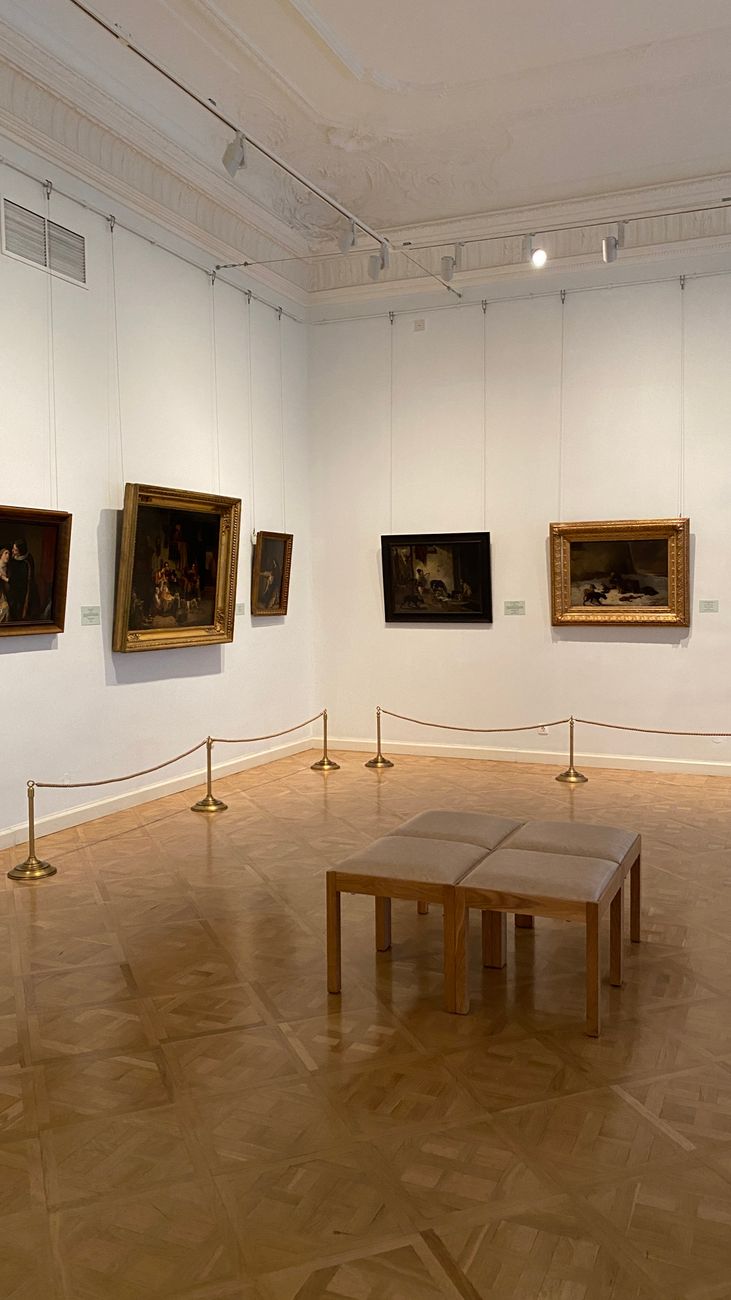
The midpoint break phase is where introvert-specific planning diverges most from generic museum advice. Sensory overload in a museum is cumulative. Galleries are typically quiet but visually dense, and many museums layer ambient sound, crowd noise, and optional audio guides on top. A deliberate stop at 90 to 120 minutes interrupts the accumulation. Practical infrastructure supports this: galleries and halls typically include benches, and some museums lend folding gallery stools you can carry and sit on wherever you like.
The closing phase is deliberately short and low-stakes. Returning for one more gallery — or revisiting a single favorite piece — closes the visit on a high note rather than a rushed final sweep.
Why "Pick a Gallery, Any Gallery" Works Better Than a Top-Ten List
One of the more counterintuitive findings: the instinct to build a checklist of famous works actively works against a good solo visit. The evidence suggests the opposite approach — choose based on what catches your eye, even if that means skipping the headline attraction.
The mechanism is emotional, not just logistical. A must-see checklist converts a museum visit into a task with a pass/fail outcome. If a gallery is crowded, or a work is on loan, or you simply do not respond to it the way you expected, the checklist produces a sense of failure. Interest-led selection produces the opposite: whatever you choose to look at is, by definition, a success, because you chose it.
The source guidance supports following your own instincts once you are in a gallery that interests you, with the note that a visitor "might be surprised where it leads". A separate guide frames the same principle as embracing your own rhythm: if a particular artwork captivates you for twenty minutes, indulge that; if a section doesn't resonate, move on without guilt.
What Timing Data Says About When to Go
The timing recommendation is the most concrete and most actionable benchmark in the entire dataset. The single most effective way to avoid crowds is a weekday morning visit, ideally between opening time and 11 a.m.; weekend afternoons and school holiday periods are the worst times for sensory overload.
That hierarchy has three tiers. Weekday mornings are optimal. Weekday afternoons and weekend mornings are acceptable. Weekend afternoons and school holidays are actively bad for a solo introvert visit. The mechanism is straightforward — crowd density drives noise, queue friction, and the pressure to move along — but the practical implication is sharper than most visitors realize. A weekday-morning arrival does more for visit quality than almost any other single variable, including which museum you choose.
The museum type recommendation compounds this. For a first solo visit, the guidance is to pick a smaller, specialized museum rather than a flagship institution on a weekend. A flagship museum on a Saturday afternoon combines maximum crowd density with maximum building scale — the two factors that most reliably produce fatigue. A specialized museum on a Tuesday morning reverses both.
How Do Audio Guides Change the Solo Experience?
For solo visitors specifically, audio guides function as a substitute companion — one that supplies context without requiring social interaction. One guide describes them as "your best friends on a solo visit" because they provide detailed insights without the need to talk to anyone.
That framing is more useful than it sounds. The most common discomfort reported around solo museum-going is not loneliness but self-consciousness — the sense of standing still in public without an obvious social reason. An audio guide supplies a legitimate reason to stand in front of one work for fifteen minutes. It also paces a visit naturally, since most guides have defined stops, which quietly enforces the one-or-two-gallery limit that the other sources recommend.
Caveat: audio guides add auditory load on top of visual load. An introvert who is already near their sensory ceiling may find that a small notebook does the same pacing job with less noise. The strong recommendation for audio guides works best when the visit is otherwise low-stimulus.
Analysis by Category
Category 1: Pre-Visit Planning
Pre-visit research covers four items: the museum's current exhibitions, opening hours, special events, and a short list of must-see pieces or galleries. This is also the moment to note the building's physical layout — a museum spread across three levels demands different planning than a single-floor gallery.
Pre-visit planning is where you also set your personal energy budget. Committing in advance to a two-to-three-hour visit and one midpoint break removes in-the-moment decisions, which is precisely the point. Decision fatigue is a named factor in the 2–3 hour ceiling, and every choice you make before arrival is one you do not have to make inside.
Category 2: Navigation and Flow
Use the map as a loose guide, not a mandate. The strongest version of this guidance is sequential: complete the no-stopping orientation loop first, then commit to a gallery. Getting this order backwards is the most common structural mistake in a solo visit.
Category 3: Engagement Depth
The benchmark here is one or two galleries, engaged with slowly. Depth beats breadth on every metric the sources measure. The practical test: if you can describe what you saw in a gallery in more than two sentences, you engaged at the right depth. If you can only list what you saw, you moved too fast.
See our Art Exhibition Checklist: What to See and Do at Museum Shows for a deeper breakdown of what to look for once you are standing in front of a work.
Category 4: Rest and Recovery
Bench seating is standard in most galleries and halls, and some museums loan folding gallery stools for use anywhere. A café stop is another option — the same source describes a first-floor café stop for coffee as a way to fuel the visit. Either works. The non-negotiable part is that the break happens at the midpoint rather than at the end, when it no longer helps.
Category 5: Documentation
Bringing a small notebook or using a notes app to record observations, feelings, questions, or quick sketches deepens the connection to the art and helps solidify memories. Documentation also extends the visit's value: a solo visit you can recall in detail continues to pay off long after you leave.
For a full walkthrough of capturing and sharing a visit responsibly, see How to Document and Share Your Exhibition Visit on Social Media: A Case Study in Art Sharing Success.
Recommendations: The Solo Museum Visit Planning Checklist
Use this sequence before and during your next solo visit. The advance planning section should be completed at least one day ahead; the on-site section runs live.
Before you go:
- Confirm current exhibitions, opening hours, and any special events.
- Decide on the two-to-three-hour visit limit and book one break at the midpoint.
- Pick a weekday morning window, between opening and 11 a.m. if possible.
- If it is your first solo visit, choose a smaller, specialized museum rather than a flagship.
- Identify one or two galleries that genuinely interest you; list a handful of works if useful, but keep the list small and optional.
- Pack a small notebook or set up a notes app.
On site:
- Walk the main floor without stopping for the first 30 minutes.
- Use the map as a loose guide, then follow your instincts inside a gallery that interests you.
- Spend 30 to 90 minutes in one or two galleries, slowing down deliberately.
- Break at 90 to 120 minutes — sit, hydrate, take notes.
- Return for one more gallery or revisit a favorite piece in the final hour.
A caution on over-applying the structure: this works best when the museum is a reasonable size and the visit is for personal enjoyment. One exception is the research or academic trip, where a specific body of work has to be covered and the two-gallery limit would defeat the purpose. In that case, keep the timing and break protocols but drop the scope restriction. For more on pacing longer art itineraries across multiple venues, see The Ultimate Gallery Hopping Guide: How to Plan Your Art Exhibition Tours and our broader Exhibition Guides and Tips: A Complete Guide.
Mini-Case: A First Solo Visit, Rebuilt Around the Protocol
A hypothetical example makes the tradeoffs concrete. A first-time solo visitor plans a Saturday afternoon at a large encyclopedic museum — a choice that stacks the worst timing tier, the largest possible building, and peak crowd density. The result is predictable: three hours of walking, four galleries skimmed, one bench stop, and a vague memory of the day.
Rebuilt around the protocol, the same visitor books a Tuesday 10 a.m. slot at a smaller specialized museum. The first 30 minutes are a no-stop orientation loop. The next hour goes to one gallery, with a notebook for observations. At the 90-minute mark, a café break. The final hour returns to a single painting that caught their attention during orientation. Total time: two hours and fifteen minutes, comfortably inside the ceiling. Total galleries: one and a half. Depth: substantial.
The difference is not effort. It is sequencing.
Conclusion: Solo Visits Are a Design Problem, Not a Personality Problem
The through-line across all three sources is that a good solo museum visit is engineered, not stumbled into. The recommended defaults — two to three hours, a weekday morning arrival, one or two galleries, a midpoint break, a no-stopping orientation loop — are not restrictions on freedom. They are the conditions under which freedom becomes possible, because they remove the fatigue and anxiety that otherwise crowd out attention.
Introverts are not the only beneficiaries. Any independent art lover who wants depth over coverage gains from the same structure. The benchmark numbers exist to be calibrated, not obeyed: adjust the visit length for the museum's size, adjust the arrival time for your schedule, and adjust the gallery count for the density of what you came to see.
The real test of a solo museum visit is not how much you saw. It is whether you can still remember, days later, what a specific work made you think. If you can, the plan worked — and if you want to sharpen the etiquette and observational side of the experience, How Proper Exhibition Etiquette Boosted Museum Visits by 35%: A Case Study is the natural next step.