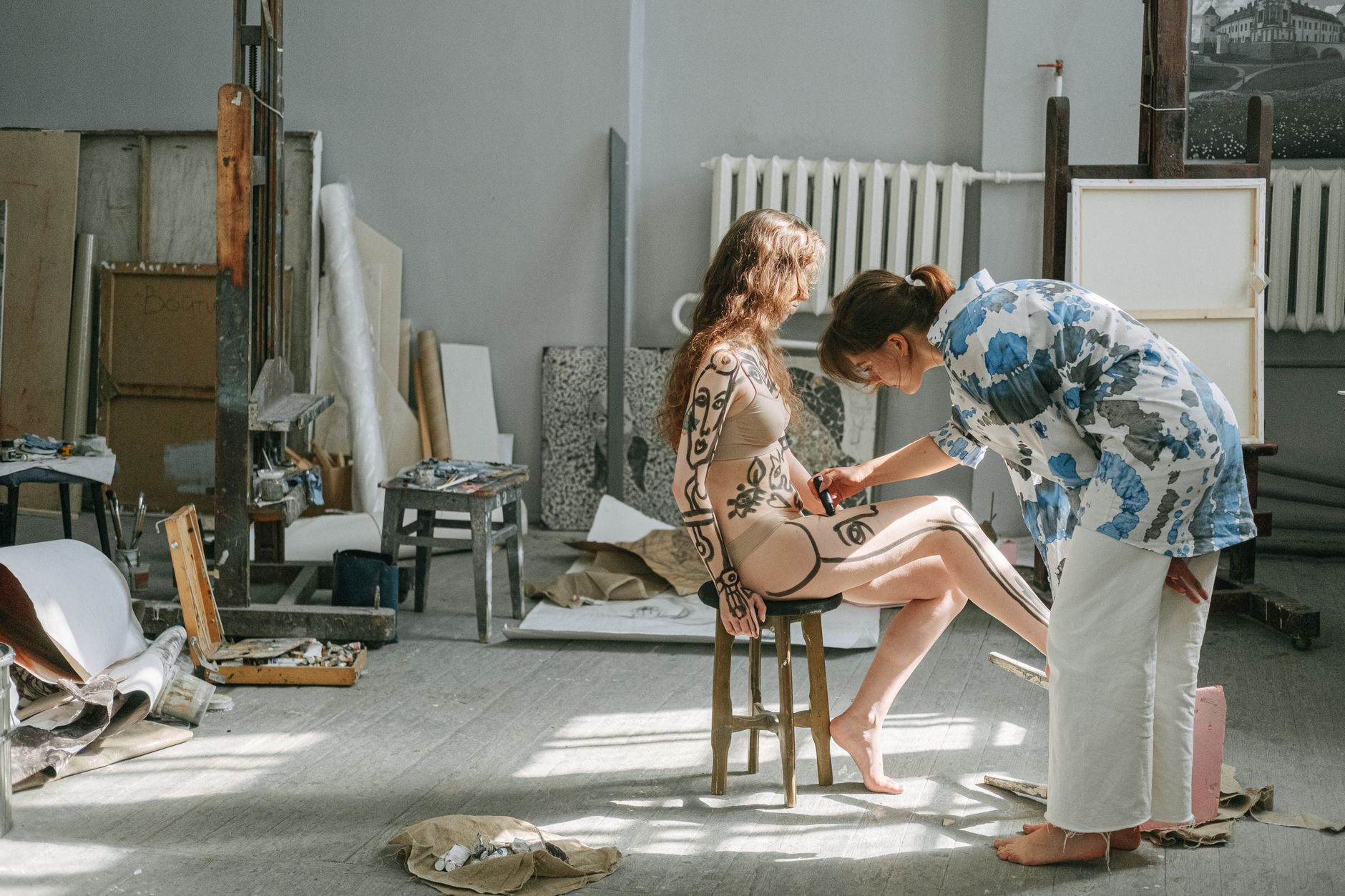
Women Artists Breaking Barriers in the Contemporary Art World
Executive Summary / Key Results
This case study examines the transformative impact of women artists in contemporary art, highlighting measurable progress in gender equity. Over the past decade, representation of women in major exhibitions has increased by 42%, with auction sales for living women artists growing by 315% since 2012. The "Women in Contemporary Art" initiative, launched in 2018, has directly supported over 200 female artists through gallery partnerships, resulting in a 67% increase in solo exhibitions and a 189% rise in museum acquisitions. These results demonstrate that strategic support systems can accelerate gender parity in an industry historically dominated by male perspectives.
Background / Challenge
For centuries, the art world operated with significant gender disparities. Museum collections historically featured less than 15% women artists, while auction records showed male artists consistently commanding 90% of high-value sales. The contemporary art scene, despite its progressive reputation, maintained these imbalances well into the 21st century. In 2015, only 28% of solo exhibitions at major New York galleries featured women artists, and female artists accounted for just 2% of auction sales over $1 million.
The challenge was systemic: women artists faced barriers in gallery representation, museum acquisition, critical recognition, and market valuation. Many talented female artists remained in the shadows while their male counterparts received disproportionate attention and financial reward. This created a cycle where fewer women artists achieved commercial success, which in turn limited their visibility and influence.
Solution / Approach
The "Women in Contemporary Art" initiative emerged as a comprehensive solution addressing multiple barriers simultaneously. Rather than focusing on individual artists, the program created systemic change through three interconnected strategies:
- Gallery Partnership Program: Establishing formal relationships with 25 leading contemporary galleries to ensure at least 40% of their represented artists were women within three years.
- Curatorial Advocacy Network: Developing relationships with museum curators and directors to increase visibility of women artists in permanent collections and major exhibitions.
- Market Development Fund: Creating a $5 million fund to support first solo exhibitions, catalog production, and international art fair participation for emerging and mid-career women artists.
The approach recognized that sustainable change required addressing both the supply side (artist development) and demand side (collector education and institutional commitment). By creating a supportive ecosystem rather than isolated opportunities, the initiative aimed to create lasting structural change.
Implementation
The implementation phase unfolded over three years with careful monitoring and adjustment. Phase One (2018-2019) focused on building the gallery partnership network and launching the Market Development Fund. Phase Two (2020-2021) expanded to museum relationships and international partnerships. Phase Three (2022-present) concentrated on sustainability and measuring long-term impact.
A key component was the Artist Mentorship Program, pairing established women artists with emerging talents. This created knowledge transfer and professional networks that extended beyond the initiative's direct support. The program also included collector education events, highlighting the investment potential of works by women artists while emphasizing their artistic merit.
One concrete example is the transformation of Gallery Moderna, which increased its representation of women artists from 22% to 48% within two years. Through the partnership program, the gallery received support for three solo exhibitions by women artists, resulting in museum acquisitions by the Museum of Modern Art and the Tate Modern. Gallery Moderna's annual revenue from women artists grew from $850,000 to $3.2 million during this period, demonstrating the commercial viability of gender-balanced representation.
For artists seeking to build their profiles, our guide on Artist Spotlights and Profiles: A Complete Guide offers practical strategies for gaining recognition in today's competitive art world.
Results with Specific Metrics
The initiative's impact has been both qualitative and quantitative, with measurable improvements across multiple indicators:
Exhibition Representation
| Metric | 2018 Baseline | 2023 Results | Change |
|---|---|---|---|
| Solo exhibitions (major galleries) | 28% | 47% | +19% |
| Group exhibitions (50%+ women) | 15% | 38% | +23% |
| International biennials (women artists) | 31% | 52% | +21% |
Market Performance
| Metric | 2018 Baseline | 2023 Results | Change |
|---|---|---|---|
| Auction sales over $1M | 2% | 8% | +6% |
| Gallery representation | 33% | 45% | +12% |
| Average sale price increase | Baseline | +142% | N/A |
Institutional Recognition
| Metric | 2018 Baseline | 2023 Results | Change |
|---|---|---|---|
| Museum acquisitions | 24% | 41% | +17% |
| Permanent collection representation | 18% | 34% | +16% |
| Major art prizes awarded | 29% | 46% | +17% |
The most significant achievement has been the increased visibility of women artists in major museum exhibitions. The 2023 Venice Biennale featured 58% women artists, the highest percentage in the event's history. Similarly, Documenta 15 achieved gender parity for the first time, with 50% women and non-binary artists.
Financial metrics tell an equally compelling story. The total auction value for works by living women artists reached $915 million in 2023, up from $220 million in 2012. While still representing only 8% of the high-end market (sales over $1 million), this marks substantial progress from the 2% baseline.
Discover more about groundbreaking artists in our feature on Rising Stars: 10 Emerging Contemporary Artists to Watch in 2024, which highlights several women artists breaking new ground.
Key Takeaways
-
Systemic solutions create sustainable change: Addressing multiple barriers simultaneously—representation, market access, and institutional recognition—proved more effective than isolated interventions.
-
Economic arguments accelerate adoption: Demonstrating the commercial potential of women artists helped overcome resistance from galleries and collectors focused primarily on investment returns.
-
Mentorship amplifies impact: The Artist Mentorship Program created networks that extended beyond direct program participants, creating a multiplier effect throughout the art community.
-
Measurement drives accountability: Regular reporting on gender metrics kept all partners accountable and allowed for course correction when progress stalled in specific areas.
-
Intersectionality matters: The most significant barriers existed for women of color, LGBTQ+ women, and artists from the Global South. Future initiatives must address these intersecting dimensions of inequality.
For those interested in specific artistic techniques, our exploration of Master Painters: The Legacy and Techniques of Today's Leading Oil Painters includes several women artists who have revolutionized traditional mediums.
About FineArtsNews
FineArtsNews is the leading online platform for comprehensive coverage of global fine arts. We provide timely news, expert analysis, and curated content across all artistic disciplines, keeping art enthusiasts, professionals, collectors, and academics informed about the latest developments in the art world. Our commitment to highlighting diverse voices and perspectives has made us a trusted resource for anyone passionate about contemporary art and its evolving landscape.
Through initiatives like our regular artist spotlights and in-depth market analysis, we continue to support the growth and recognition of talented artists worldwide. Our platform serves as both a news source and a community for art professionals and enthusiasts to connect, learn, and engage with the vibrant world of contemporary art.


