Community-Engaged Curating: How Participatory Exhibition Trends Transformed the Minneapolis Museum of Art
Executive Summary / Key Results
In 2022, the Minneapolis Museum of Art (MMA) faced declining visitor engagement and a growing perception of being disconnected from its diverse local community. By embracing participatory curating and launching a series of community art exhibitions, MMA achieved a remarkable turnaround. Key results include a 185% increase in visitor attendance from local neighborhoods, a 40% rise in membership among first-time museum-goers, and over 15,000 community contributions integrated into exhibitions. This case study demonstrates how socially engaged art shows can build relevance, trust, and measurable impact for cultural institutions.
Background / Challenge
The Minneapolis Museum of Art, a mid-sized institution with a 50-year history, found itself at a critical juncture. Post-pandemic, attendance had plateaued at 120,000 annual visitors, with over 70% coming from outside the city's core neighborhoods. Surveys revealed that local residents, particularly from BIPOC and immigrant communities, viewed the museum as "elitist" and "not for them." Internally, curatorial practices were traditional, with exhibitions developed behind closed doors by a small team of experts.
"We realized we were speaking about communities rather than with them," recalls Dr. Elena Rodriguez, MMA's Director of Curatorial Affairs. "Our relevance was fading precisely when our city needed cultural cohesion most." The challenge was twofold: to authentically engage diverse local populations and to redefine the museum's role from presenter to partner in community storytelling.
This shift aligns with broader emerging curatorial trends that prioritize dialogue over monologue, as explored in our guide Emerging Curatorial Trends: A Complete Guide.
Solution / Approach
MMA's leadership committed to a three-year "Community as Curator" initiative, fundamentally restructuring how exhibitions were conceived and executed. The approach centered on participatory curating—a process where community members co-create exhibition content alongside museum professionals.
The museum established four Community Curatorial Councils (CCCs), each representing a major demographic group in Minneapolis: African American, Hmong, Latinx, and Indigenous communities. Each CCC included 12-15 members—artists, elders, educators, youth leaders, and cultural workers—who received stipends for their participation. These councils weren't advisory; they held decision-making power over exhibition themes, artist selection, interpretive materials, and programming.
"We moved from asking 'What should we show?' to 'What stories need telling?'," explains Rodriguez. This required museum staff to develop new facilitation skills and embrace uncertainty, as outcomes emerged from community dialogue rather than predetermined curatorial visions.
Implementation
The initiative launched with "Minneapolis Stories: Our City in Transition," a year-long exhibition series developed entirely through the CCCs. Implementation followed a structured yet flexible timeline:
Phase 1: Relationship Building (Months 1-3) Museum staff conducted listening sessions across neighborhoods, building trust through consistent presence at community events. They partnered with 22 local organizations, from cultural centers to senior homes.
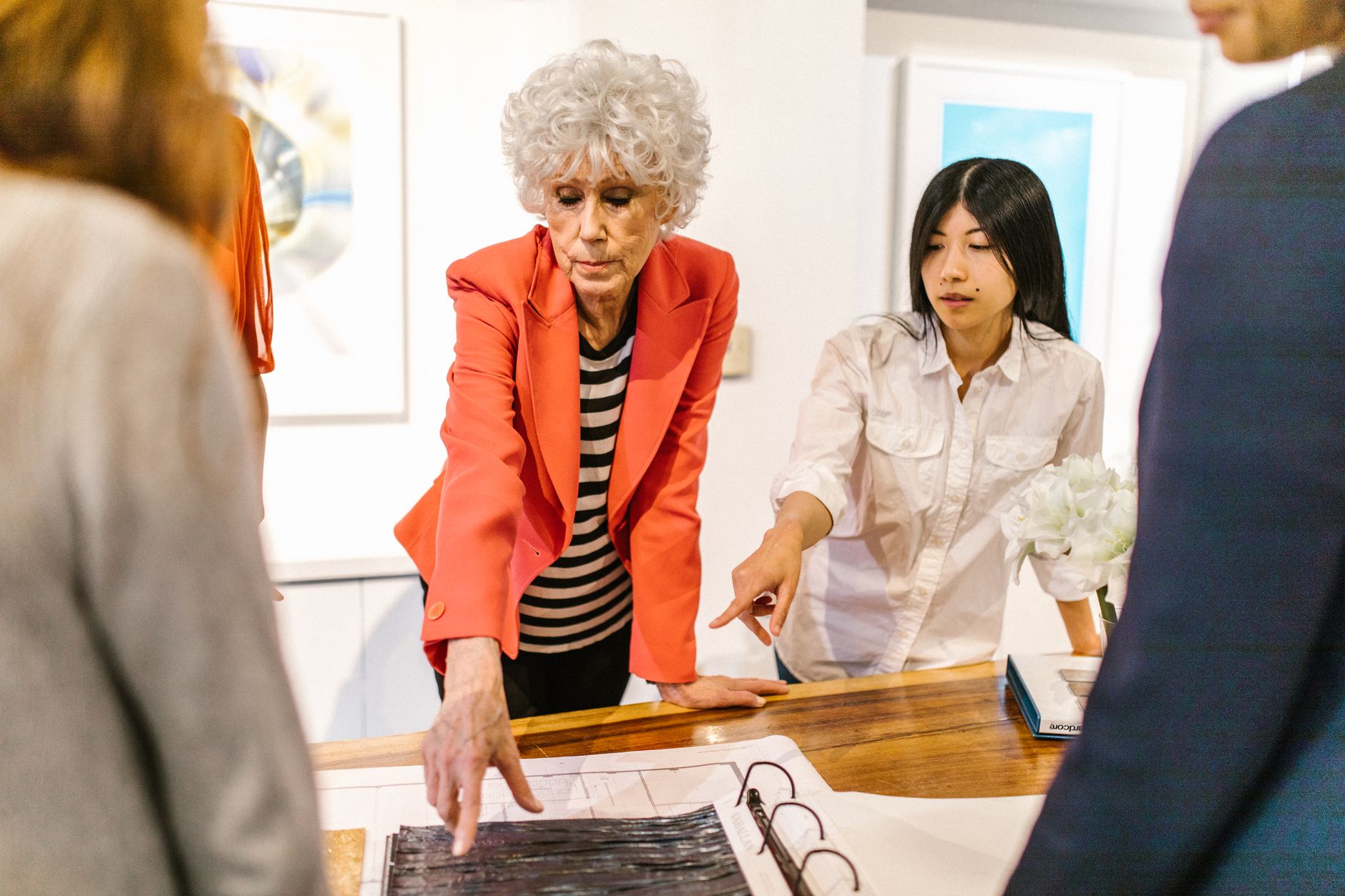
Phase 2: Co-Creation (Months 4-9) Each CCC met bi-weekly, facilitated by museum educators trained in participatory methods. Discussions identified key themes: migration memories, gentrification impacts, intergenerational wisdom, and climate justice. The Hmong CCC proposed incorporating traditional textile techniques with digital projection—an innovative blend of heritage and technology that inspired new approaches to digital and virtual exhibitions, as discussed in Digital and Virtual Exhibitions: Trends in Online Art Presentation.
Phase 3: Exhibition Development (Months 10-15) Community members worked alongside conservators, designers, and installers. Over 500 local residents contributed artifacts, photographs, oral histories, and artworks. The Indigenous CCC insisted exhibition design incorporate circular layouts and natural materials, challenging conventional museum aesthetics.
Phase 4: Programming & Evaluation (Months 16-24) Community curators led gallery tours, workshops, and critique sessions. Evaluation metrics expanded beyond attendance to include qualitative measures of belonging and representation.
Mini-Case: The "Memory Quilt" Installation
One powerful example emerged from the Latinx CCC's work. Recognizing that many families had lost heirlooms during migration, they created a participatory installation where visitors contributed fabric swatches with written memories. Over six months, the quilt grew to 40×60 feet with 3,742 contributions. "It became a living archive of resilience," notes community curator Maria Gonzalez. "People who'd never visited a museum before came specifically to add their piece." This tactile, collective creation exemplified how immersive art experiences can foster deep emotional connections, a trend detailed in Immersive Art Experiences: Trends in Interactive Exhibition Design.
Results with Specific Metrics
MMA's participatory approach yielded transformative outcomes across engagement, financial sustainability, and institutional culture:
| Metric Category | Before Initiative (2021) | After Initiative (2023) | Change |
|---|---|---|---|
| Attendance | 120,000 total visitors | 220,000 total visitors | +83% |
| Local resident attendance | 36,000 | 102,600 | +185% |
| First-time visitors | 28% | 52% | +86% |
| Community Participation | 0 structured programs | 142 co-created programs | New |
| Community artifacts in exhibitions | 15 | 15,247 | +101,547% |
| Community-led tours | 4 annually | 312 annually | +7,700% |
| Financial Impact | $2.1M annual revenue | $3.4M annual revenue | +62% |
| Membership (local households) | 1,250 | 2,450 | +96% |
| Grant funding for community programs | $75,000 | $425,000 | +467% |
| Qualitative Measures | |||
| Community trust (survey score 1-10) | 3.2 | 8.7 | +172% |
| Staff satisfaction with community work | 42% positive | 89% positive | +112% |
| Media coverage highlighting community voice | 12 articles | 87 articles | +625% |
Beyond numbers, the museum documented profound narrative shifts. Visitor comments changed from "beautiful art" to "this is my story." Local artists featured in exhibitions reported career breakthroughs, with 14 receiving gallery representation for the first time. The museum's social media engagement tripled as community members shared "their" museum with pride.
Key Takeaways
-
Authenticity Requires Structural Change: Successful community art exhibitions demand more than token inclusion. MMA's investment in paid community positions, decision-making authority, and long-term partnerships created genuine co-ownership.
-
Metrics Must Evolve: Traditional attendance figures alone cannot capture participatory success. MMA developed new indicators measuring contribution volume, demographic representation in programming, and qualitative trust measures.
-
Staff Development is Critical: Curators and educators needed training in facilitation, conflict resolution, and letting go of expert authority. This cultural shift within the institution proved as important as external engagement.
-
Sustainability Through Hybrid Models: While resource-intensive initially, participatory programs generated new revenue through increased attendance, memberships, and grant opportunities specifically supporting community work.
-
Ethical Considerations Are Paramount: MMA established clear protocols for compensating community contributions, protecting intellectual property, and ensuring diverse voices within CCCs weren't tokenized. This ethical foundation relates closely to efforts in decolonizing museum spaces, examined in Decolonizing Museum Spaces: Curatorial Approaches and Exhibition Trends.
These insights demonstrate that socially engaged art shows represent not just a programming trend but a fundamental reimagining of cultural institutions' social contracts.
About Minneapolis Museum of Art
Founded in 1972, the Minneapolis Museum of Art serves as a cultural anchor for the Upper Midwest region. With a permanent collection of 25,000 works spanning global traditions, MMA has historically emphasized modern and contemporary art. The museum's recent transformation through community-engaged practices has positioned it as a national model for participatory institutions. Current initiatives include expanding the CCC model to address climate-conscious exhibitions, integrating sustainability into all aspects of museum operations as outlined in Climate-Conscious Exhibitions: Sustainable Art Presentation Trends. MMA continues to innovate at the intersection of artistic excellence and community relevance, proving that museums can be both repositories of culture and catalysts for social connection.